The Sheffield Battalion (WW1), and Redmires Camp, Lodge Moor, Sheffield. | ||
 | | |
 | ||||||||||||||
I can do no better than to copy, (with a few alterations), this introduction from Gibson & Oldfield (1994): “(On the) 10th September 1914, the City of Sheffield officially raised its own battalion to fight in the war against Germany. After a number of changes its title was settled as the 12th (Service) Battalion York and Lancaster Regiment (Sheffield City Battalion). Just three and a half years later, on the 28th February 1918, the battalion was disbanded, never to be reformed. In that short space of time, over 3 000 men passed through the ranks of the City Battalion. Of these, almost 700 were killed or died of their wounds, and over 500 were commissioned. This was a considerable achievement for a Kitchener Battalion. (sic). Despite its short existence, the Battalion made a significant contribution to the war effort. It distinguished itself in the heat and dust of Egypt, and later in the mud and misery of the Western Front. One particular day stands out... the 1st of July 1916. That day was the biggest military disaster in terms of casualties ever suffered by the British Army. Over 50 000 men were lost, of whom 20 000 were killed. The City Battalion lost 248 men killed and over 300 men wounded, (about 66% of its strength). This battle (unsurprisingly) marked the end of the original Battalion. 3D map of the battlefield. Another excellent & moving website is here The Battalion was rebuilt from men from Lancashire, Norfolk and Staffordshire, as well as remaining volunteers from the early days. It continued to serve in France throughout 1916 and 1917 but the Army reorganisation of 1918 bought an end to its short life.” “Sheffield City Battalion” Gibson R. & Oldfield P. (1994) Pen and Sword Books. (P6) | ||||||||||||||
 | ||||||||||||||
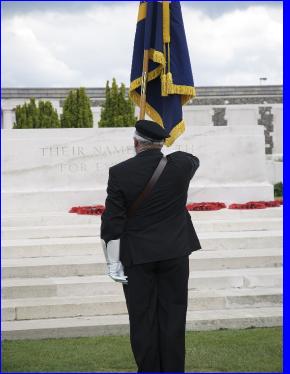
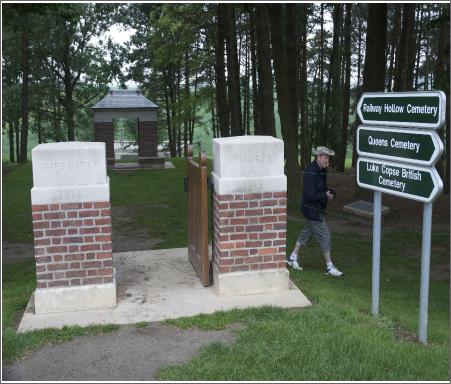
Entrance to the Sheffield Memorial, showing Railway Hollow below it.(The battlefield was towards Luke Copse) | ||||||||||||||
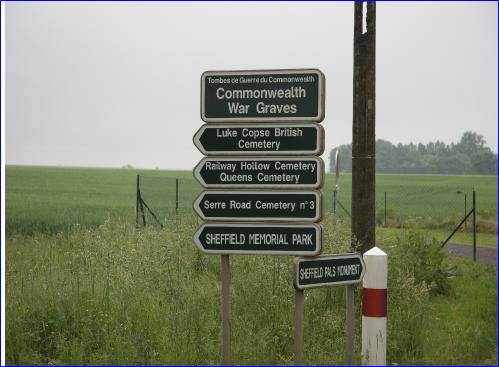
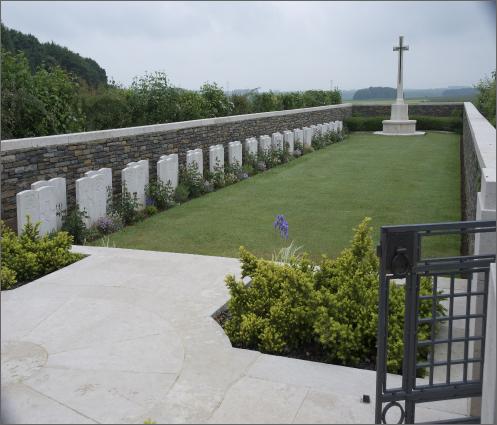
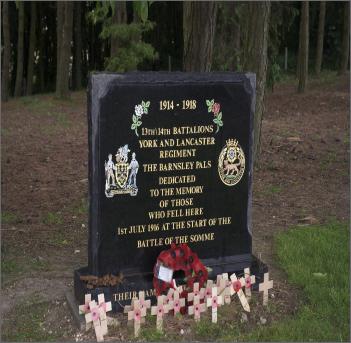
The 1st of July Somme fiasco, referred to above, was the offensive to capture positions near to a `French village called Serre. The men were rested below four copses (named “Matthew”, “Mark”’ “Luke”’ and “John”) in “Railway Hollow” prior to an assault on enemy positions on higher ground over open country with no cover. Prior to the assault the enemy positions were heavily bombarded for several days. The British High Command really believed that this would destroy the German positions and cut the barbed wire. It did neither. The Germans were in very deep trenches and had prior warning of the attack. The ‘Sheffield Lads’ were ordered to walk across the open ground and take over the enemy trenches. They were cut to pieces by the well- positioned German machine gunners. If they had run and charged it might have been a different story. Today there are cemeteries named after the four copses, and a large and imposing war memorial near the main road to Serre (some 1 000 yards from the actual battle site). Summary: (Plaque) There is also a moving memorial to the "Accrington Pals” and "Barnsley Pals" near Railway Hollow. (See pics below). The part of the Sheffield Battalion is commerated here. | ||||||||||||||
 | ||||||||||||||
 | ||||||||||||||
| | | | | | | | | | | | | | |
 | ||||||||
 | ||||||||
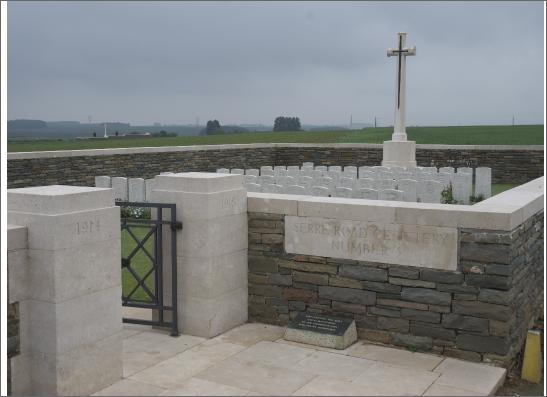
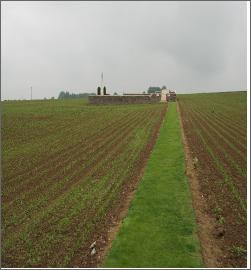
Serre Road cemetery (left) The gentle incline towards Serre can be seen here and in the picture below (towards Queens cemetery) - a perfect killing ground. | ||||||||
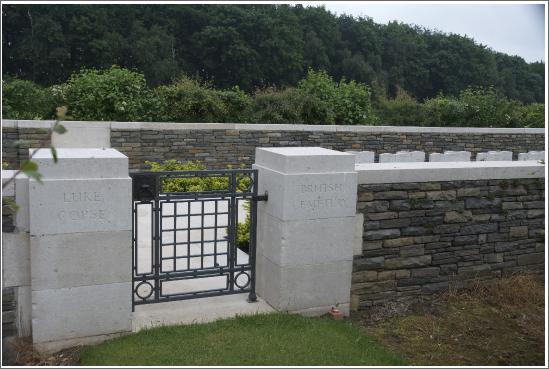
Luke Copse cemetery (above) - as with all these cemeteries - so beautifully kept. | ||||||||
| | | | | | | | |
 | ||||||||||
 | ||||||||||
 | ||||||||||
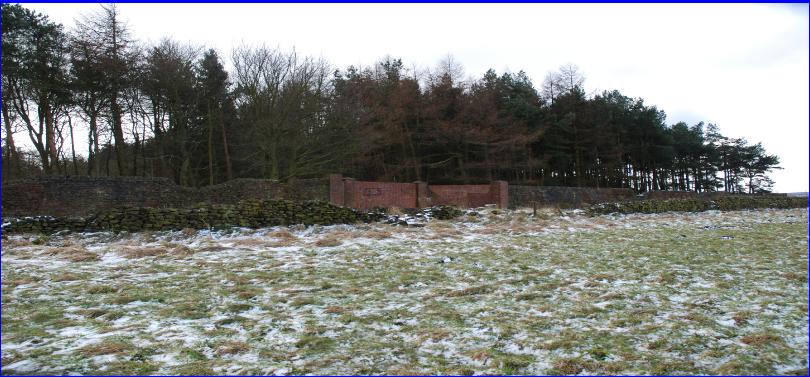
Going back in time...to the very start: After its inception, rather than be stationed at Hillsbrough Barracks, the Battalion was stationed at Redmires Camp, Lodge Moor, on the site of an old racecourse. The wall and old entrance site can still be seen (‘photo below). Part of this site is now a Gypsy/Travellers’ permanent encampment. Further towards Lodge Moor (opposite a pub called “The Three Merry Lads") was the entrance to a WW2 POW camp. This did not utilise the old huts from WW1, but was on the old WW1 Parade Ground. | ||||||||||
Haig’s cruel remarks - about the 12th having stayed in their trenches during the battle only, (again), goes to show how out-of-touch this incompetent butcher really was. (It is said that Lloyd-George wished to remove him but that Haig had contacts in High Places - including that of the Crown). | ||||||||||
| | | | | | | | | | |
 | ||||
 | ||||
| | | | |
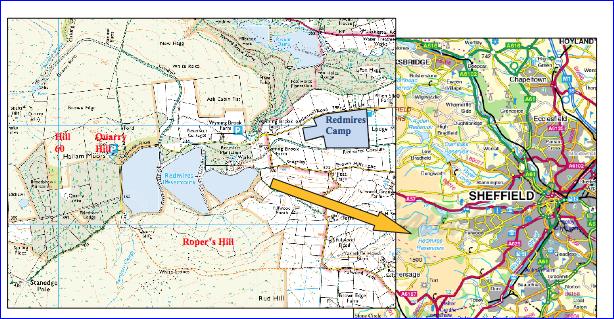 | ||||
The location of the camp & training grounds. (Left - and below)
((Left) Taken from the pdf file on the archaelogical fieldwork at Redmires. (From: http://www.pals.org.uk/sheffield/)) | ||||
| | | | |
 | Taken from Googlemaps - showing the 3 reservoirs (the upper has been drained prior to refilling in February 2010). The WW2 POW camp (blue box) and the WW1 camp (yellow box) can be seen. This map is a 'hot-link'. Please click on it and explore the blue lozenges. A then-and-now picture of the camp is here. ......................................................................... There was also a World War I air landing site next to the camp, used by aircraft to defend Sheffield against Zeppelin raids, but it was only used until 1916. "A notable prisoner held from 1918 to 1919 was then U-boat captain Karl Dönitz, whom Hitler later chose as his successor to the position of Führer, a position which Donitz fulfilled in the last days of the Second World War." (Wikipedia) If this was the case, then this site was a WW1 POW site as well as a WW2 one. The huts were wooden “Type 19”, 60 feet by 20 feet, and slept 34 men each. There was a pot-bellied stove in the middle of each although the heat given off from them would have been insufficient to heat these structures, built as they were, on the edge of a windy area of the Peak district, when winters were much more severe than now (The author lives less than a mile from this area!). Redmires lies about 1 100 feet above sea level. Besides the 2 local pubs (the other being “The Sportsman”), there was regular entertainment and a YMCA hut was built on site. An advance party of soldiers moved into the (still uncompleted) huts on December the 3rd 1914. The initial members of the Battalion moved for (more) Advanced Training at Cannock Chase on 11th of May 1915. Between these dates (December 1914 and May 1915) the Battalion trained at Wyming brook and the hills opposite the Upper Redmires reservoir (These were “Roper’s Hill”, “Hill 60" - and the adjacent old 19th Century quarry works called "Quarry Hill" (above)). These have been marked on the GoogleMaps feature. | |||||||
Some views of the Redmires Training area around Quarry Hill. | ||||||||
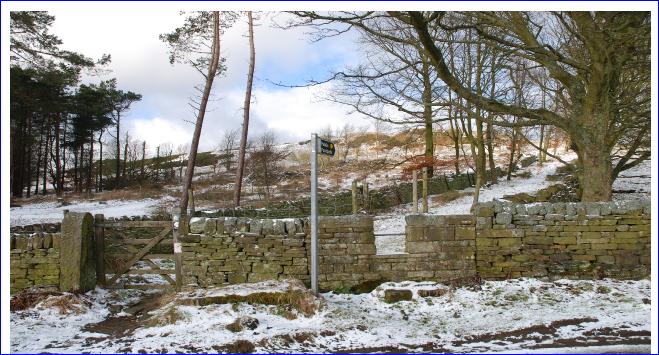 | ||||||||
Quarry Hill from the road. To the left (top) was Hill 60. To the immediate left of the gate is the site of an old pub called 'Ocean View'. (Now an uneven car park). | ||||||||
| | | | | | | | |
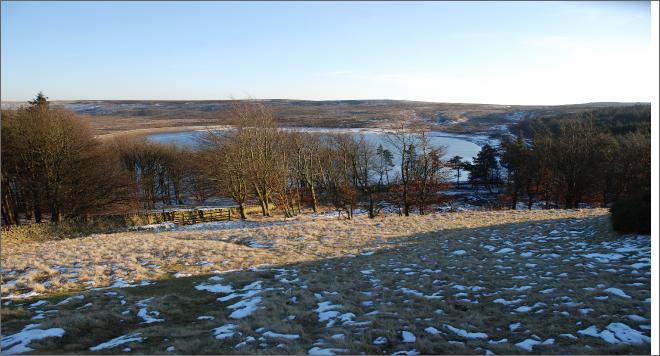
(Right) Roper Hill to the far left in far distance, taken from Quarry Hill. Below: an aerial view of Quarry Hill showing the postition of some of the trenches. (Thanks to Phil Sidebottom). A 1916 Officers' map of the trenches is here. | ||||
 | ||||
| | | | |
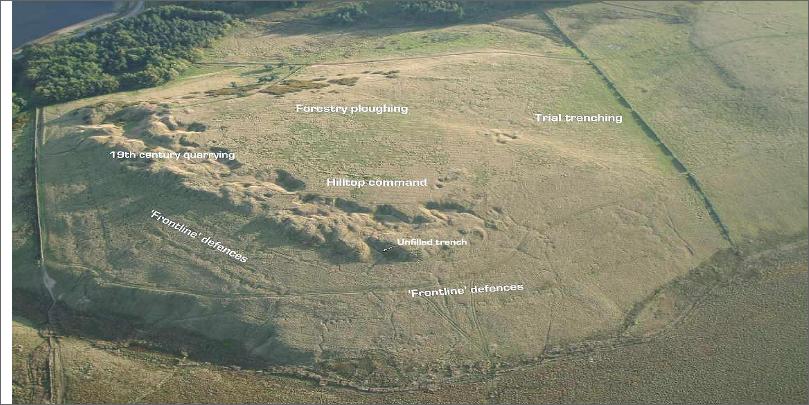 | |||||
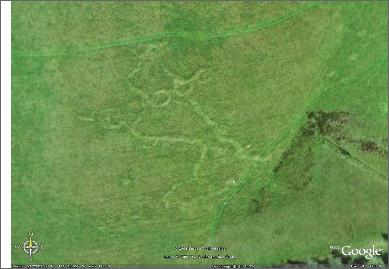
(Left) Aerial view still showing thr remnants of the trench system. (From PFN, Sheffield History Forum. Permission pending). Ditto below, a survey map of the same area. | |||||
 | |||||
| | | | | |
 | ||||
...and all that hard work to be undone on one day in the Somme!. One's heart bleeds.... | ||||
| | | | |
| |||||||||||||||||||||||||||||||||
| | ||||||||||||||||||||||||||||||||